
 4th day
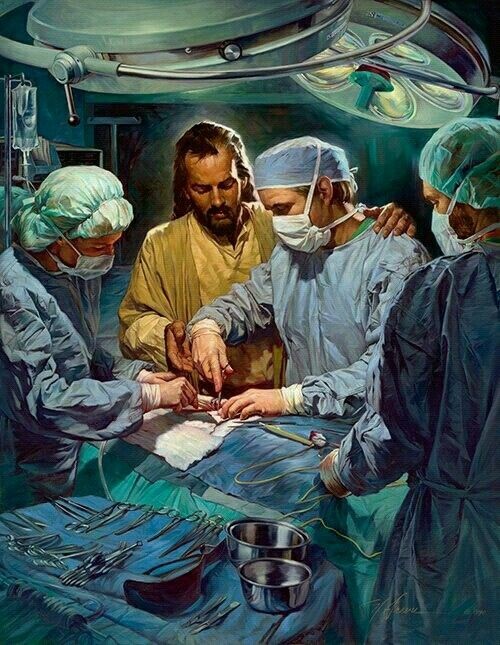
Caring for the sick
Throughout his public ministry, Jesus paid particular attention to the sick, healing them. In this regard, Leo XIV emphasizes that, ‘‘The Christian tradition of visiting the sick, washing their wounds and comforting the afflicted is not simply a philanthropic work, but an ecclesial action through which, in the sick, the members of the Church touch the suffering flesh of Christ’’[1].
‘‘In the 16th Century, Saint John of God, in founding the Hospitallar Order that bears his name, created model hospitals that welcomed everyone, regardless of social or economic status. His famous expression “Do good, my brothers!” has become a motto for active charity towards the sick. At the same period, Saint Camille de Lellis founded the Order of the Regular Clerick Ministers of the Infirm, the Camillians, whose mission was to serve the sick with total devotion. Their Rule commands: Let each one asks the Lord to grant them a maternal love for their neighbor so that we may serve them with all the charity of our soul and body, for we desire, with the grace of God, to serve the sick with the love that a loving mother has for her only sick child. In hospitals, on battlefields, in prisons and in the streets, Camillians embodied the mercy of Christ the Physician’’[2].
Our Foundress, Sister Eugénie herself, set an example for this care for the sick, when she joined the Red Cross, ‘‘I registered with the Red Cross in Bouzonville and after a few nursing courses, I was assigned to one of the local Lazarettos. There, I witnessed firsthand the many hardships, resulting from the battles of War. I was helping for surgeries, dressings and took care of the sick, as well as the ambulance service at the train station. There, when the trains coming from the battlefields, were grazing, we visited each wounded person, redid the dressings as needed and gave them moisturizers’’. Cf. My vocation, Spiritan Collection n°3, page 46.
Prayer to be said together
Lord, grant us your spirit of patience to continue to be at the service of the most suffering ones, through simple and concrete means, to help, sustain, care, heal, encourage and raise up.
[1] ‘‘I have loved you’’, Dilexi te, Apostolic Exhortation on love to the poorest, Pope Leo XIV, 2025, n°49.
[2] Idem, n°50.